Category: The AI Edge

Exploring the frontier of artificial intelligence — new models, research papers, and breakthroughs shaping the field

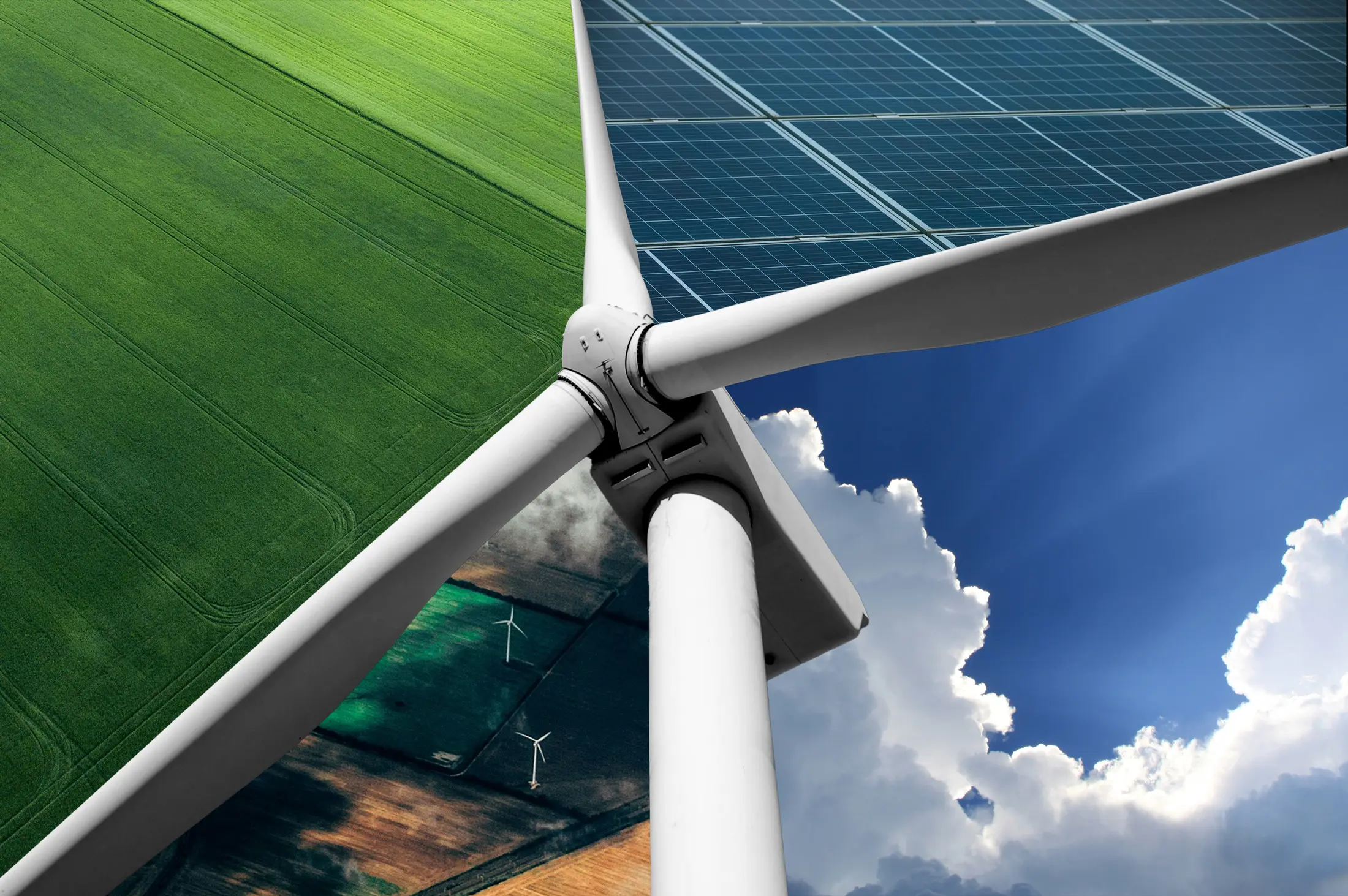
  • Investors Are Betting Big on the Energy Transition

    Investors Are Betting Big on the Energy Transition

    Despite political headwinds in the United States, global investors are signaling strong confidence that the shift toward clean energy is here to stay. Two major funds announced this week underscore that sentiment, with a combined $21 billion committed to projects and companies driving the transition.

    Brookfield revealed it has raised $20 billion for its second energy transition fund, 33% more than its first in 2021. The firm has already deployed $5 billion into renewable power developers focused on solar, wind, and battery storage. Raising a larger fund in a less exuberant economic climate suggests investors see long-term value in the sector rather than a passing trend.

    Energy Impact Partners also closed its third flagship fund at $1.36 billion, about 40% larger than its predecessor. The venture investor, known for backing growth-stage climate companies, typically participates in rounds averaging $26 million. Recent investments include GridBeyond, which manages distributed energy resources, and Quilt, a manufacturer of residential heat pumps.

    The broader picture supports this optimism. Since 2014, institutional investors such as pension funds and endowments have allocated nearly $1 trillion to the energy transition. Climate tech venture funds, while smaller in scale, are outpacing the rest of the venture industry. They now account for 3.8% of all venture capital raised globally, nearly double their share from 2020.

    Political uncertainty in the U.S. remains a drag. Proposed policy reversals threaten tax credits and grants, and the International Energy Agency has cut its forecast for U.S. renewable deployment by 45% through 2030. Even so, global renewable capacity is expected to double by the end of the decade, driven by strong growth in China, India, Europe, and Sub-Saharan Africa.

    Analysts at DNV project that renewables will supply 65% of global electricity by 2040 and almost all of it by 2060. It may fall short of achieving net-zero by 2050, but the momentum clearly points toward continued expansion. The short-term turbulence in the U.S. does little to alter the global trajectory: investors are still betting that the energy transition isn’t going away.

  • The AI Revolution in Modern Travel

    The AI Revolution in Modern Travel

    AI is redefining how people plan and experience travel. Instead of browsing endless lists, travellers now get tailored suggestions that fit their interests and personalities. Social media and booking platforms use AI to curate destinations, activities, and even local experiences that feel personal and authentic. This technology not only simplifies planning but also helps spread tourism beyond crowded hotspots by revealing hidden gems.

    The next evolution is what experts call “agentic AI” — systems that don’t just recommend but act. These tools will automatically rebook flights, update itineraries, and make real-time adjustments when disruptions occur. The aim is frictionless travel, where logistics disappear into the background and the journey itself takes centre stage.

    Yet this convenience raises a key question: does AI expand travellers’ freedom or quietly narrow their choices? The truth lies in balance. Personalisation can empower travellers, but unchecked algorithms risk limiting exposure to diverse options. Transparency, clear consent, and user control are essential. AI should guide, not dictate.

    Trust will define the next phase of travel innovation. As data collection grows, travellers demand to know how their information is used. Ethical AI means explicit consent, explainable systems, and real opt-in choices. Especially as agentic AI begins acting autonomously, travellers must remain in control of their data and decisions.

    Industry leaders argue that global standards are needed to guide AI’s role in tourism. This includes frameworks for privacy, fairness, sustainability, and workforce training. Responsible innovation ensures that technology enhances—not replaces—human connection.

    AI is also transforming cultural exchange. By removing language barriers and curating meaningful local encounters, it enables deeper cultural understanding and shared prosperity. In countries investing heavily in AI and tourism, the technology supports local artisans, festivals, and small businesses, fostering inclusive growth.

    Ultimately, the question is not whether to use AI, but how to use it ethically. Responsible systems must be transparent, accountable, and inclusive. As AI becomes more capable, the goal is clear: technology should serve people and promote genuine discovery, connection, and respect.

    The future of travel is intelligent, adaptive, and human-centred—a new era where journeys are shaped by innovation with integrity.

  • Intel Unveils First PC Chip Built on Its New 18A Manufacturing Process

    Intel Unveils First PC Chip Built on Its New 18A Manufacturing Process

    Intel has disclosed new technical details about its upcoming Panther Lake processor — the first laptop chip built using its next-generation 18A fabrication process. The announcement marks a critical milestone in Intel’s ambitious effort to regain its leadership position in semiconductor manufacturing.

    Targeted at high-performance, AI-enabled laptops, Panther Lake represents a major test of Intel’s ability to successfully scale the 18A process and recover market share lost to AMD.

    According to the company, the integrated graphics and CPU cores in Panther Lake deliver up to 50% faster performance compared to the previous Lunar Lake generation, which was largely produced by Taiwan Semiconductor Manufacturing Company (TSMC). The 18A process introduces a new transistor design and a more efficient power delivery system, enhancing performance and energy efficiency.

    Panther Lake is built on a system-on-chip (SoC) architecture that merges the CPU, GPU, and other critical components into a single integrated circuit. Production will begin ramping up later this year, with first units expected before the end of 2025 and wider availability starting January 2026.

    High Stakes for Intel’s Comeback

    Panther Lake is extremely important to Intel on many different levels,” said Bob O’Donnell, chief analyst at Technalysis Research. He added that the chip could serve as proof of Intel’s ongoing progress in semiconductor innovation and a demonstration of what its new fabs are capable of producing.

    Intel’s new CEO, Lip-Bu Tan, has scaled back the extensive manufacturing expansion initiated by his predecessor, Pat Gelsinger. In July, the company warned it would pause development of its future 14A process unless a customer committed to adopting it.

    After months of uncertainty — including public calls by former U.S. President Donald Trump for Tan’s resignation — Intel secured new investments from SoftBank Group and Nvidia. Following Tan’s meeting with Trump and White House officials, the U.S. government converted a planned CHIPS Act grant into a 9.9% equity stake in Intel, signaling renewed government backing.

    New Technologies as Catalysts for Innovation

    “The new technologies are catalysts for innovation across our business as we build a new Intel,” Tan said.

    Intel confirmed that its Fab 52 facility in Arizona is now fully operational and will begin high-volume 18A production later this year. The same facility will also produce the company’s next-generation Clearwater Forest server processors, expected to launch in the first half of 2026.

    Although Intel still trails Nvidia in the AI graphics processor market, it expects Clearwater Forest to help it gain ground in AI data centers, thanks to its power-efficient design and integration with the 18A process.